






Spain – June 2023
Exterior – 3340 m²
Partner – Jardinería Diego
M30 vertical garden
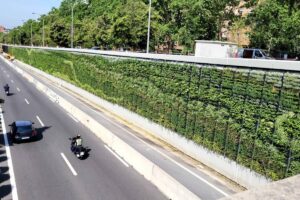
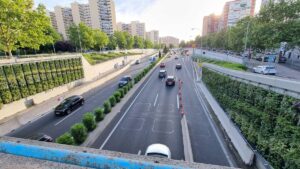
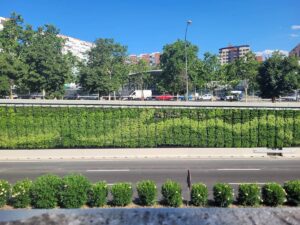
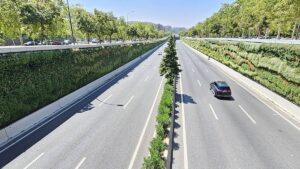
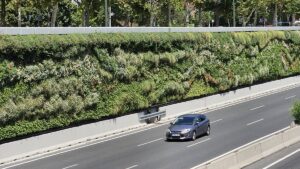
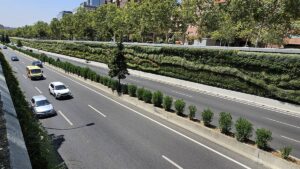
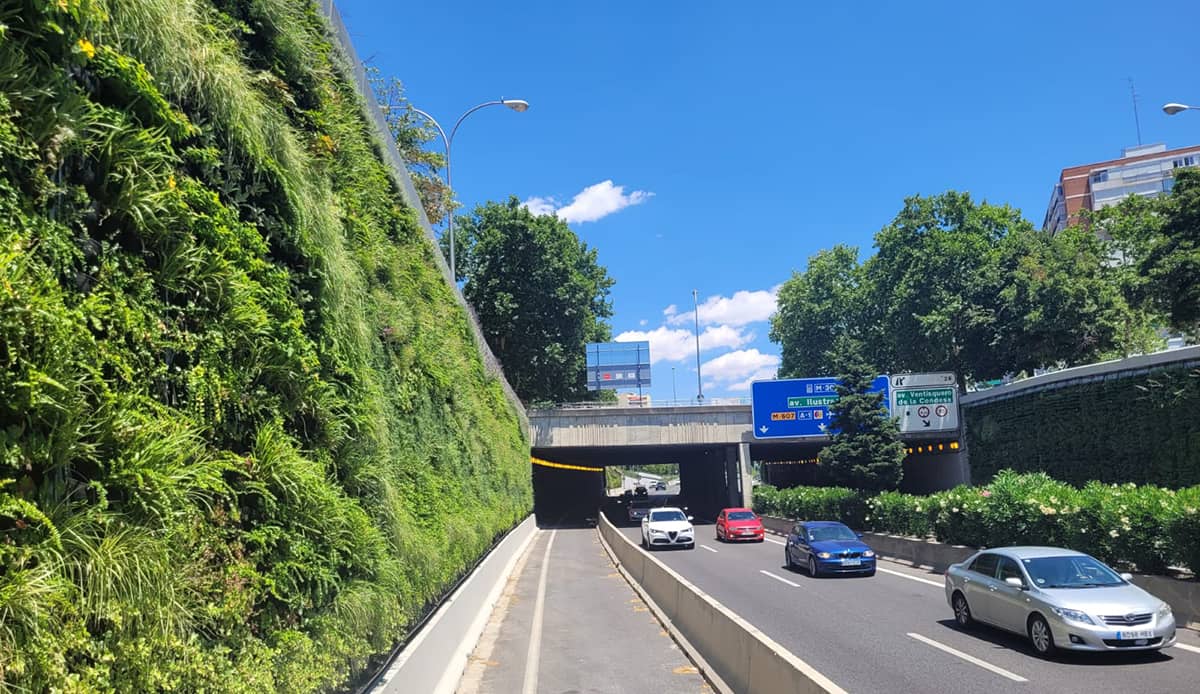
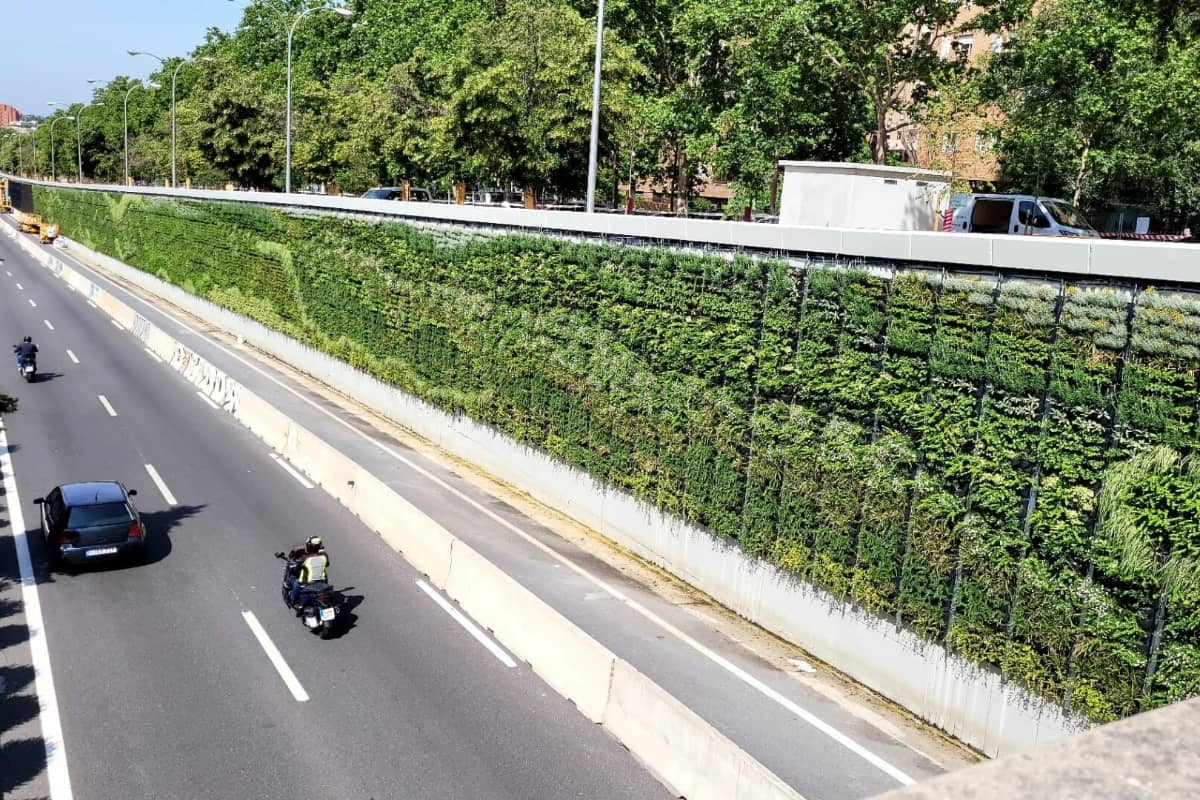
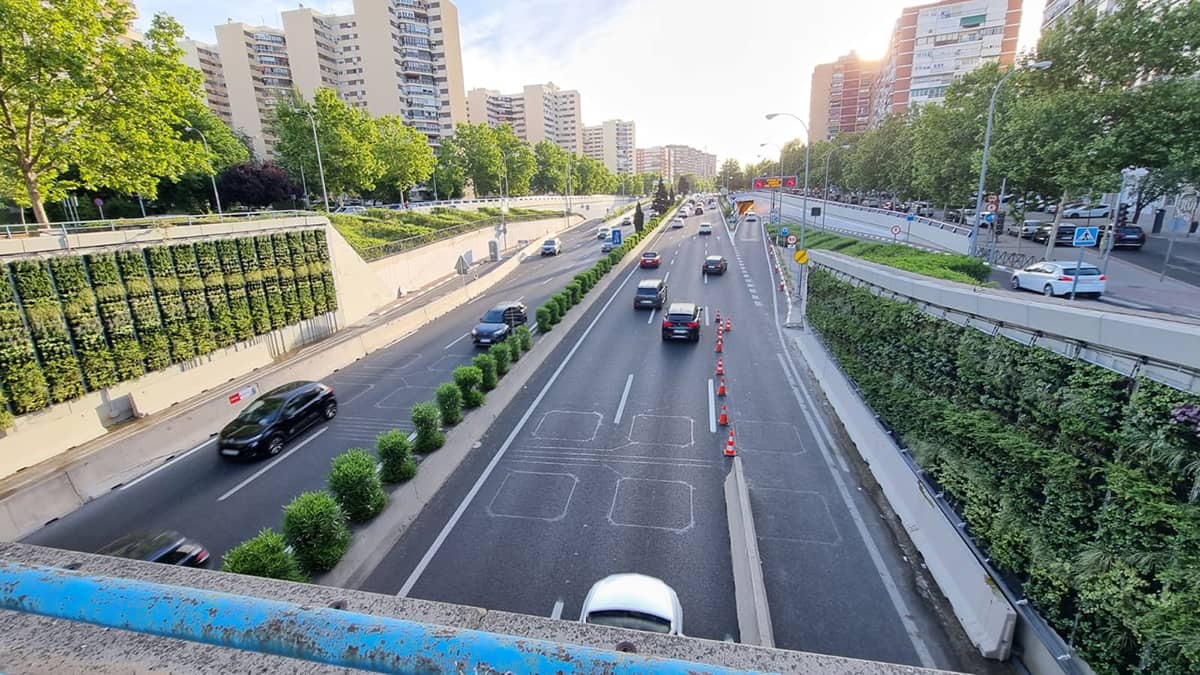
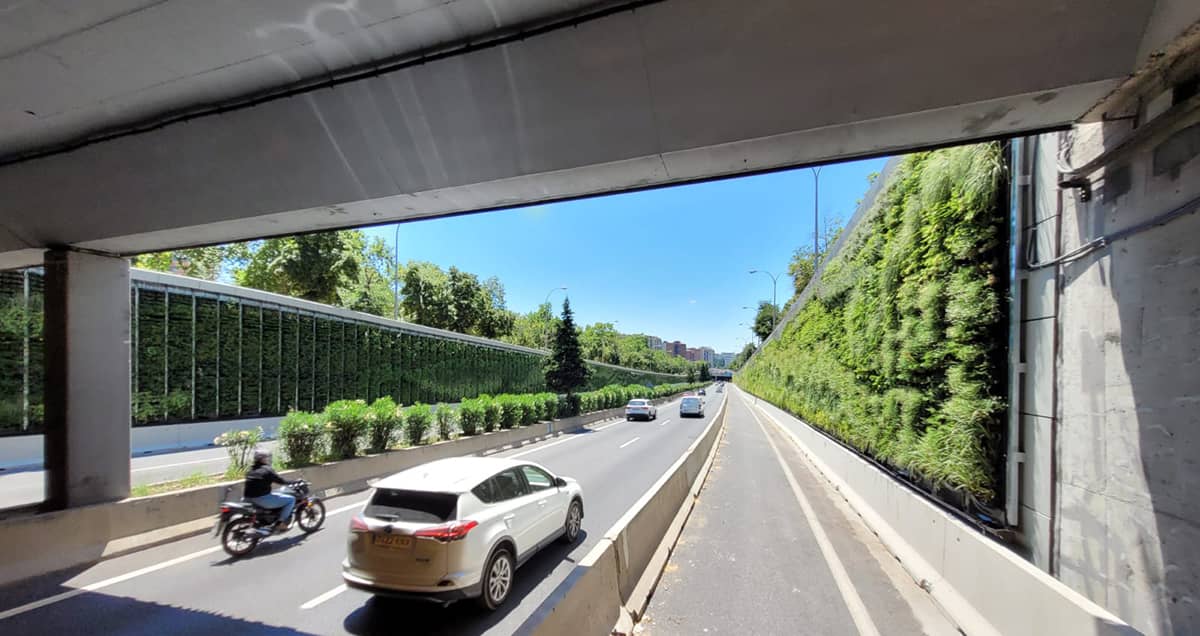
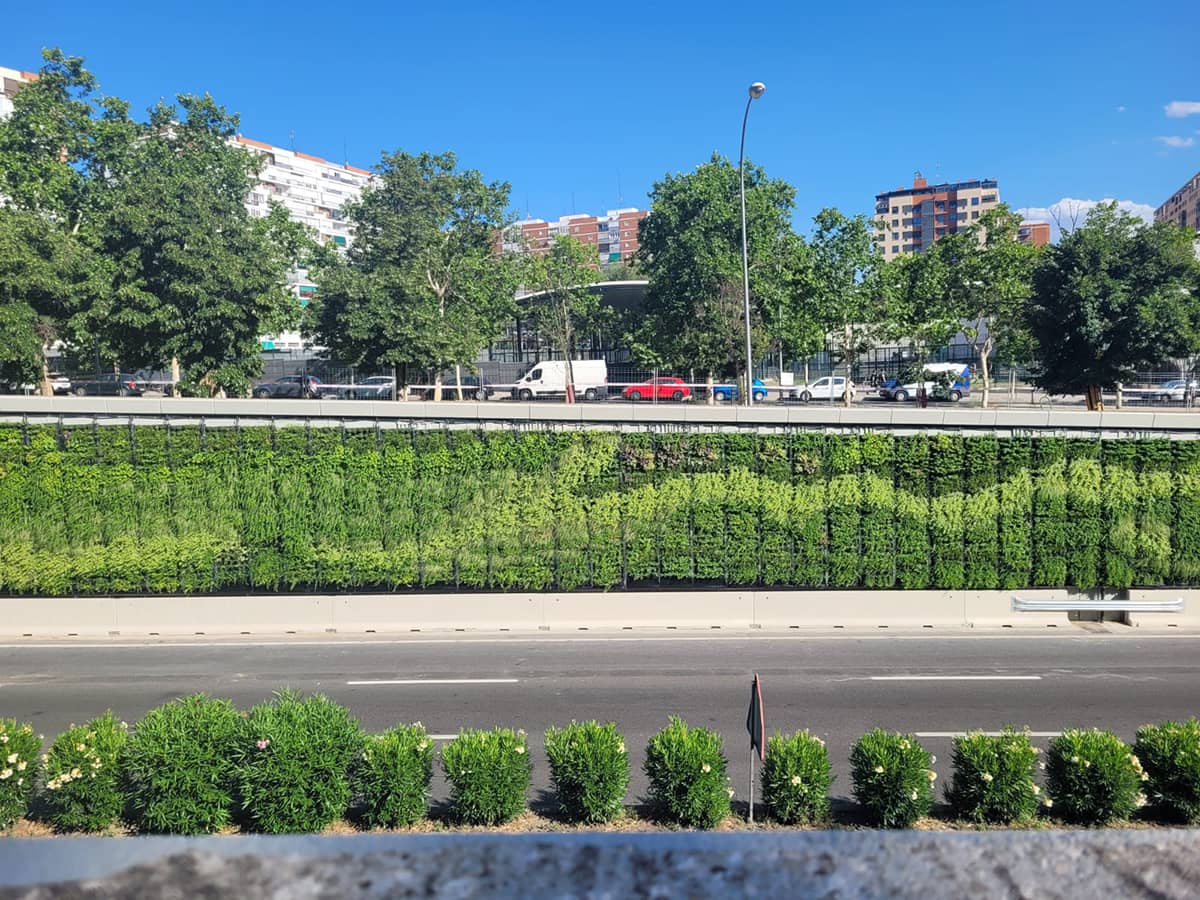
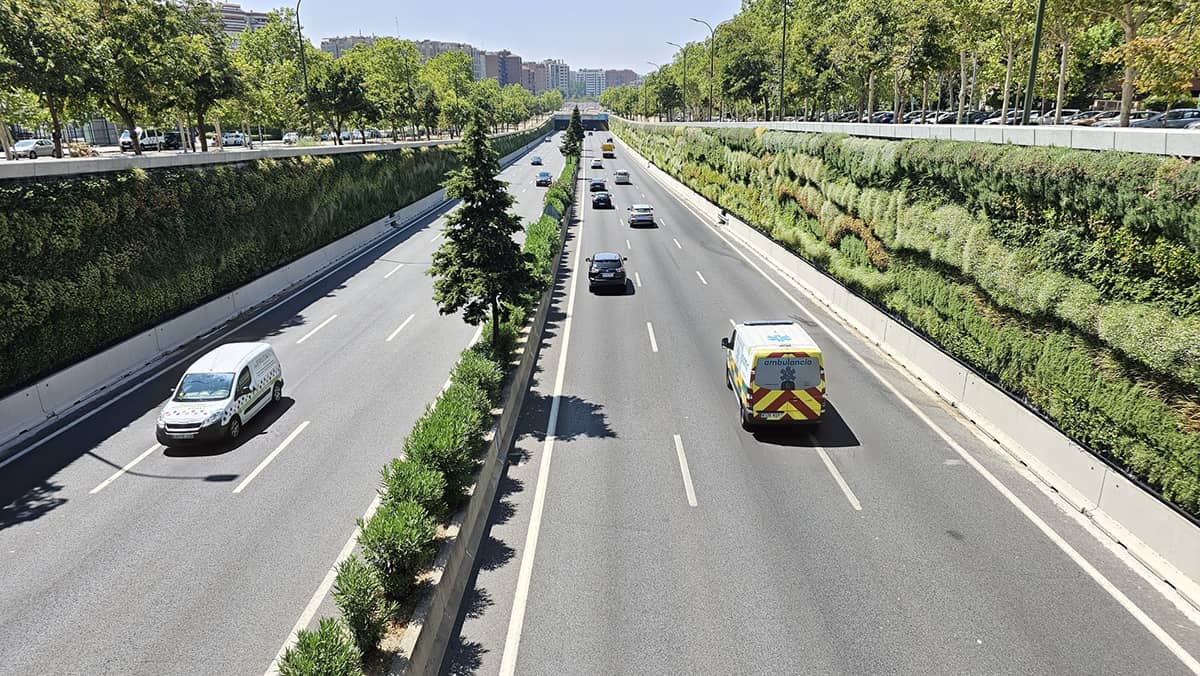
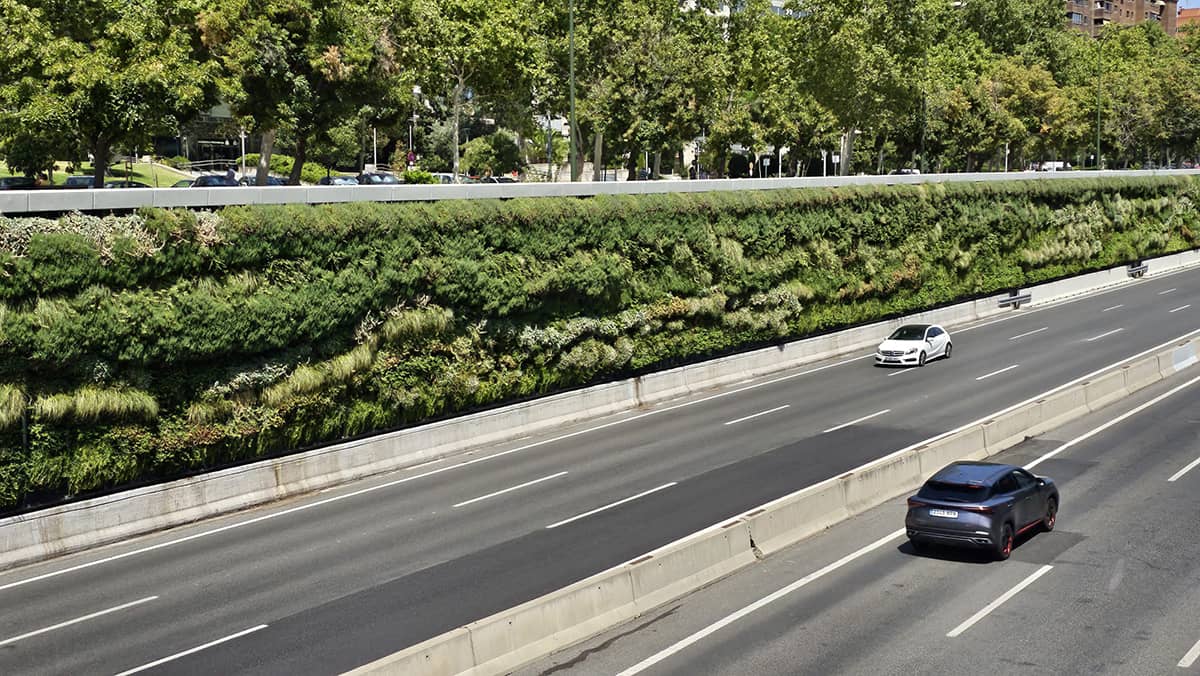
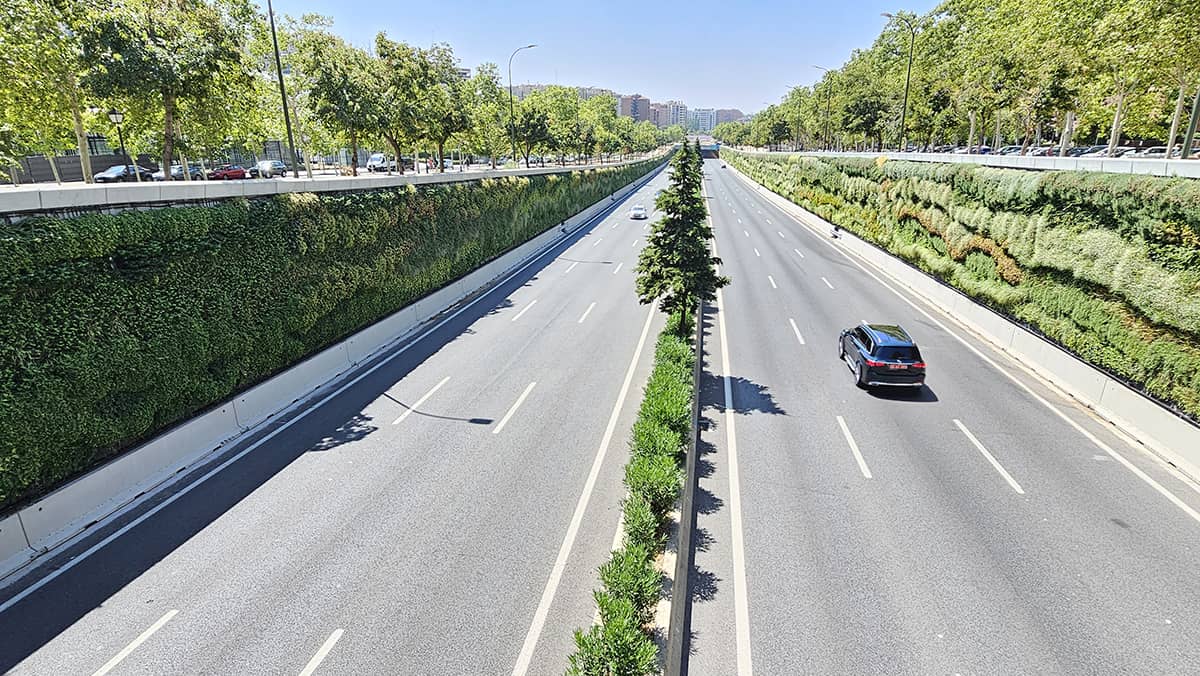
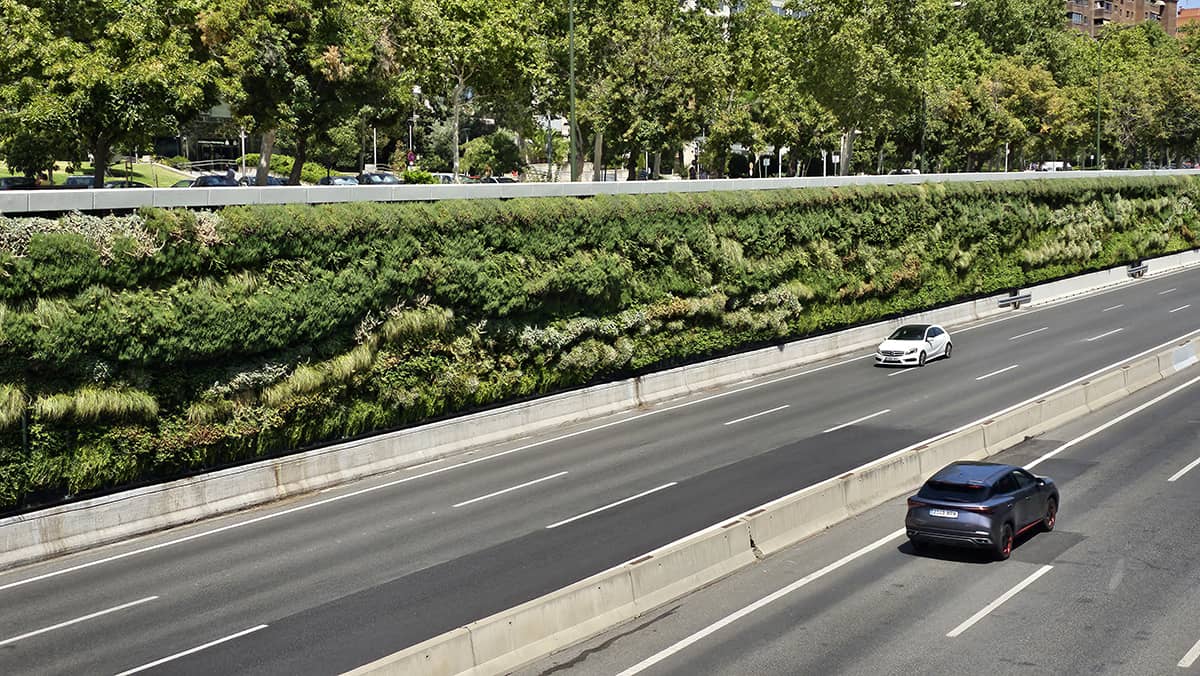
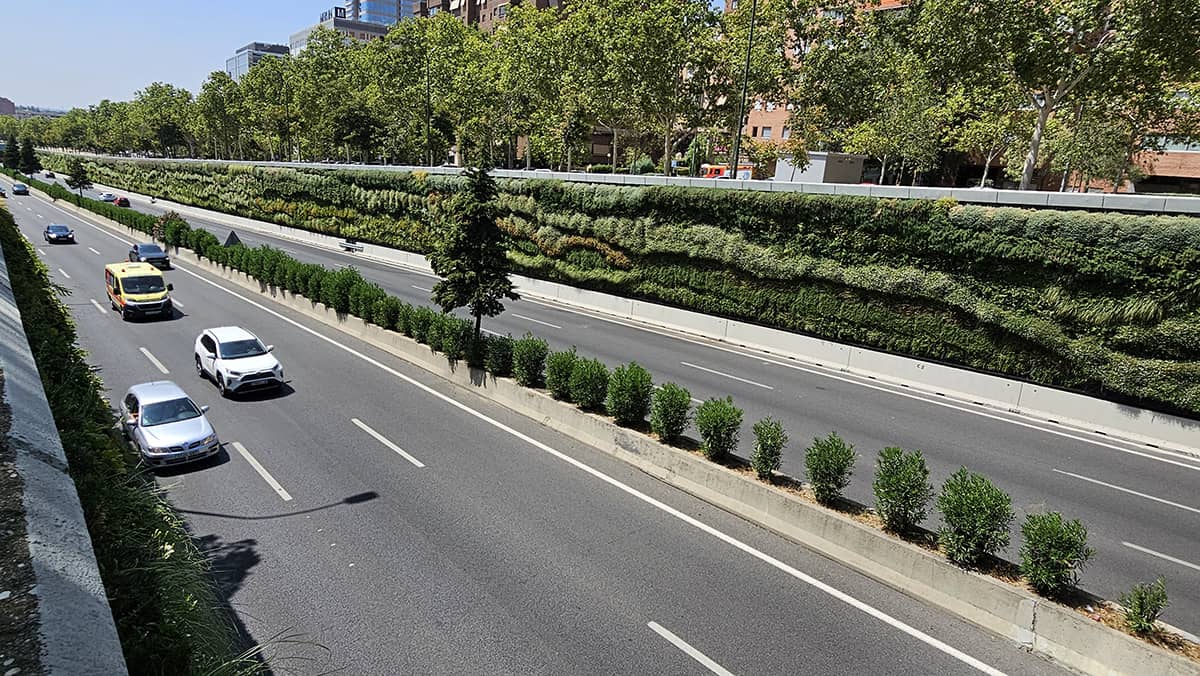
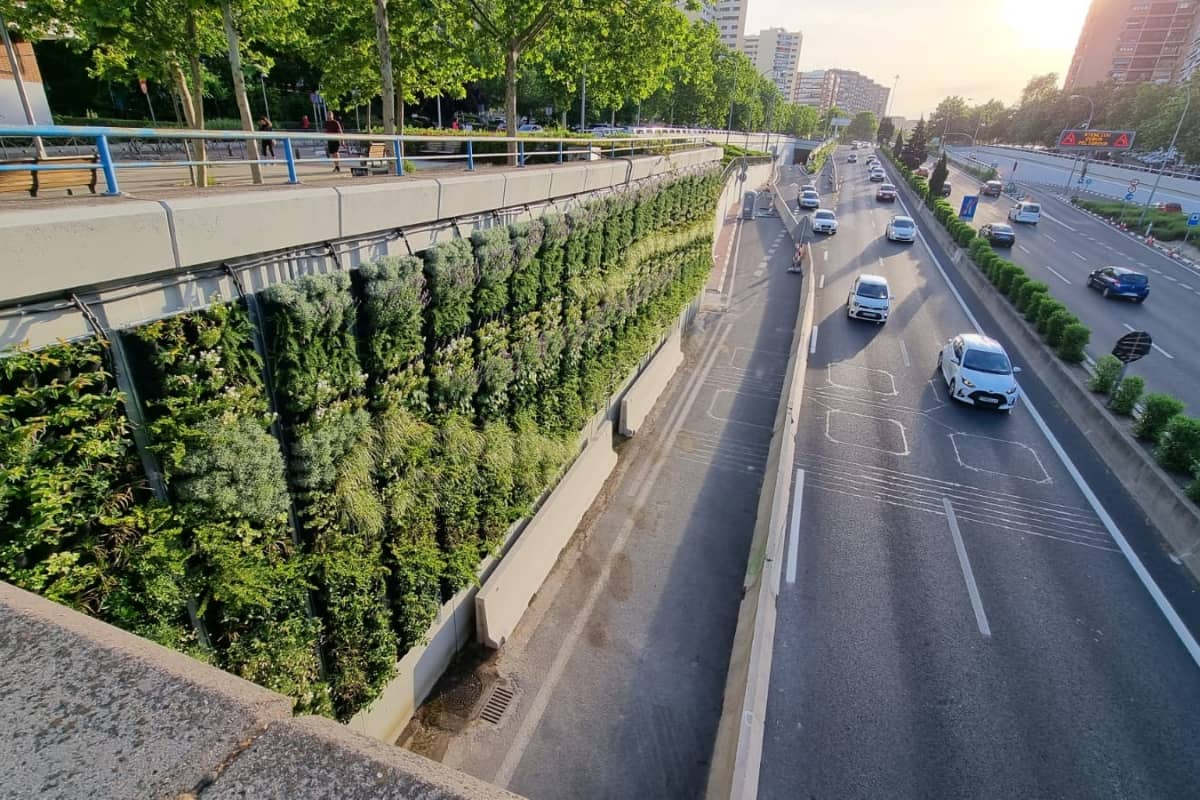
The M30 vertical garden is a unique 3,280 m² project promoted by Madrid City Council with the aim of improving environmental quality on the M30, both in terms of air quality and biodiversity in the urban environment. This vertical garden in Madrid is the first of several initiatives that will extend vertical gardens along the ring road in the coming years.
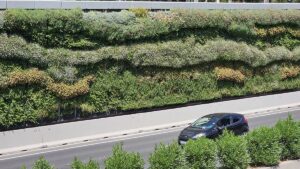
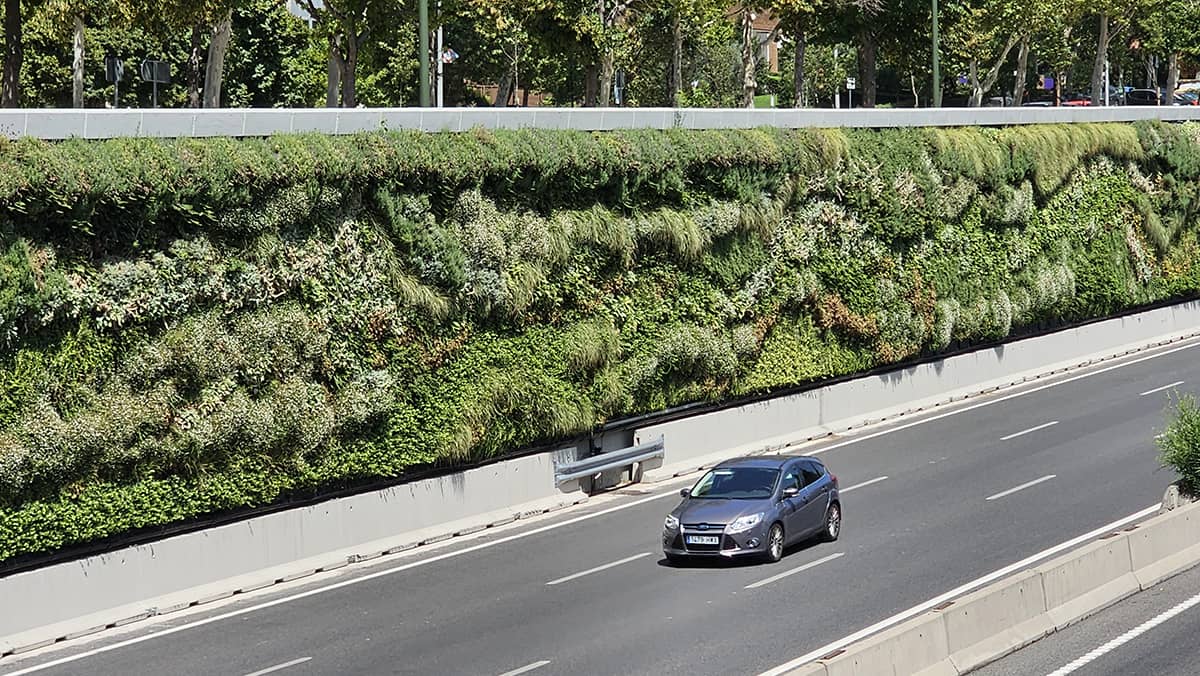
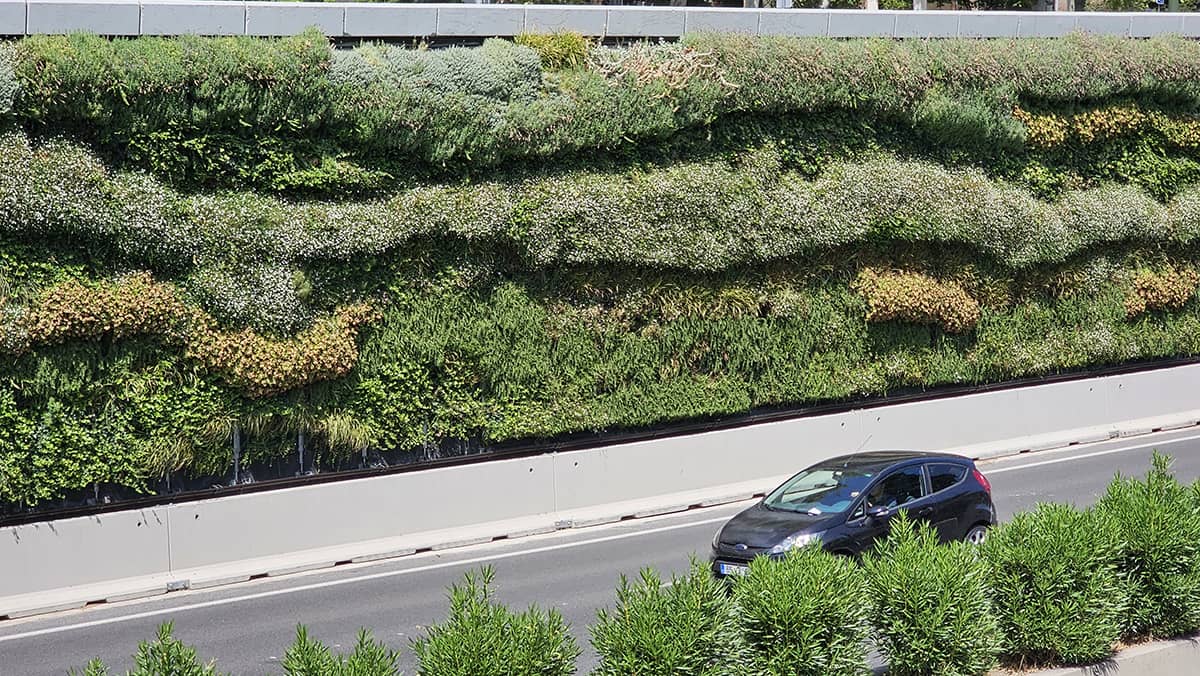
Given this objective, the selection of species would therefore play a fundamental role, as they will have to be fixers of NOx, CO, and PM (the main pollutants in urban roads), as well as being pollinators (attractors of pollinating insects). Once the microclimate and sunlight study had been carried out, it was compared with the database of scientific papers that date the most relevant species for improving air quality and biodiversity. This cross-referencing of information yielded the most suitable species, taking into account the special conditions in which we find ourselves: road traffic with high exposure to harmful particles, air currents, and high temperatures in summer due to the heat gradient from the asphalt (which can reach 80ºC when the air temperature rises to 40ºC).
Plants used for vertical gardens
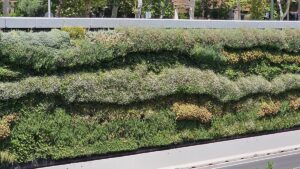
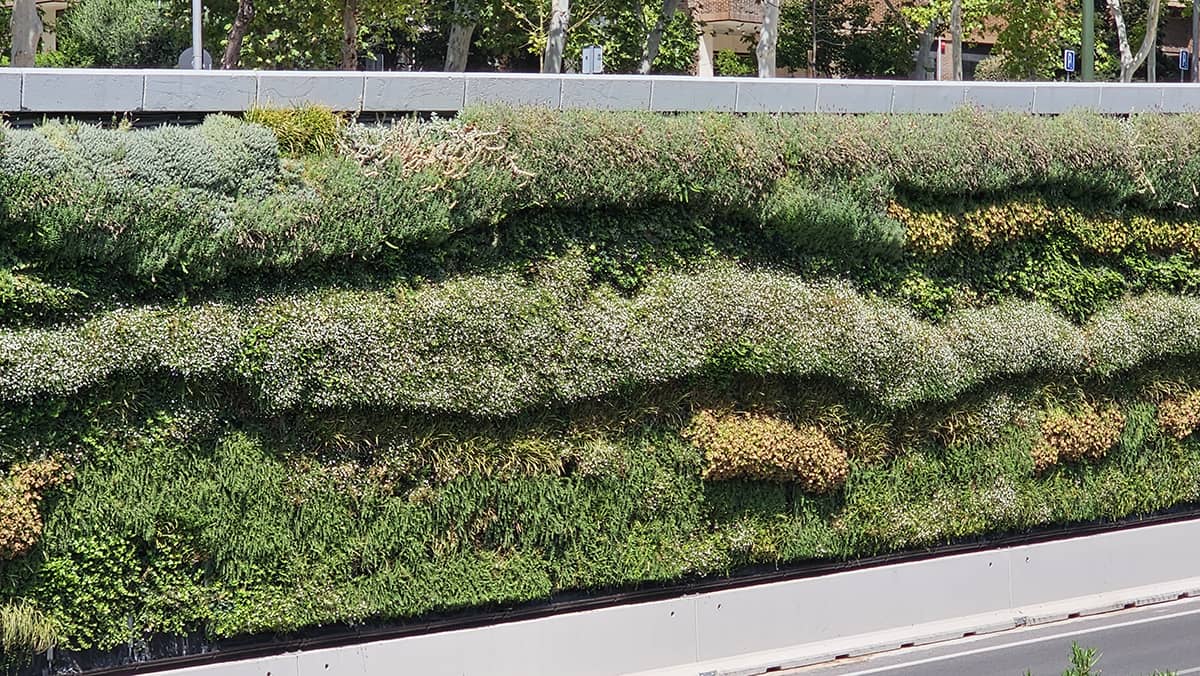
Once the plants for the vertical garden had been selected, the outdoor vertical garden was arranged in sinuous lines that simulate the air flows caused by passing vehicles, thus achieving a very organic design, where the species are interspersed according to their exposure to the sun, competition between species, and tolerance to high temperatures (closer to the asphalt).
Irrigation control plays a fundamental role in a facility of this type, as the substrate moisture must remain as stable as possible. This is why an advanced SCADA system has been chosen, which continuously reads the substrate moisture in the different irrigation sectors: substrate moisture, temperature, and conductivity. With this information, we can remotely modify the cycles as needed, as well as activate nutrient dosing. Given the size of the facility, a pressure unit with a variable speed drive has been chosen, as well as pressure and flow readings to ensure correct operation in each of the sectors. The system provides graphical information on each of the data points, as well as local climate data, and alerts by email or SMS if any of the established maximum or minimum limits are exceeded.
The implementation of this iconic vertical garden is being carried out by Jardinería Diego, contracted by the Lantania-Padecasa joint venture, and assisted by the technical drafting and supervision of Terapia Urbana. The success of the garden also lies in the good work of subsequent maintenance with visual inspections and on-site pruning and treatment when necessary. Currently, the replacement rate is below 0.5% per annum, two years after installation.


