The modular living wall has become one of the most effective answers to the environmental pressures facing cities today. Where heat, air pollution and a shortage of green space bear directly on quality of life, systems such as the Fytotextile modular living wall offer a sustainable, well-engineered alternative with measurable effects on people’s health and on how much energy a building uses.
Below we look at what a modular living wall actually is, what it does for the environment, and why the Fytotextile system has become an international reference.
What is a modular living wall?
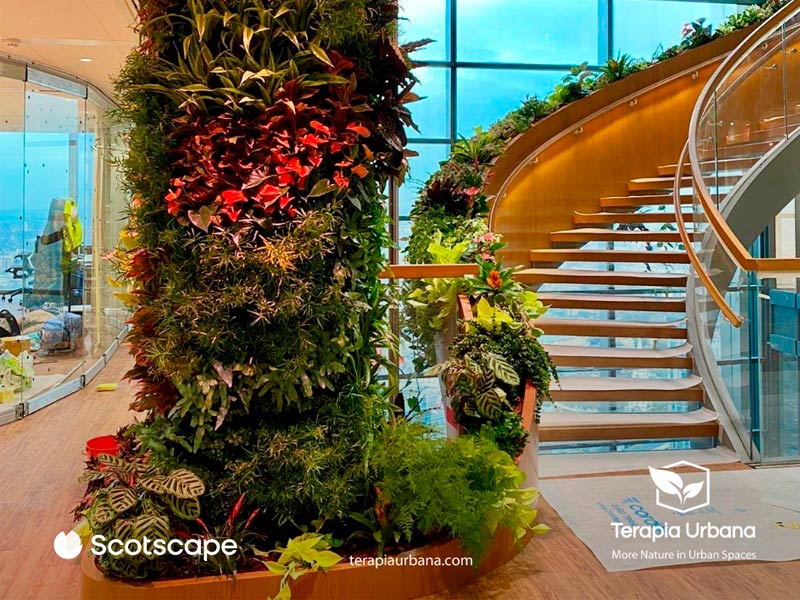
A modular living wall is a greening system built to be installed on exterior façades or interior walls. Unlike traditional systems, Fytotextile living walls stand out for how quickly they go up, how far they can be adapted to a given wall, and how well the planting performs over time.
Budget calculator
Our systems are incorporated into the Cype Price Generator and Landscape Base.


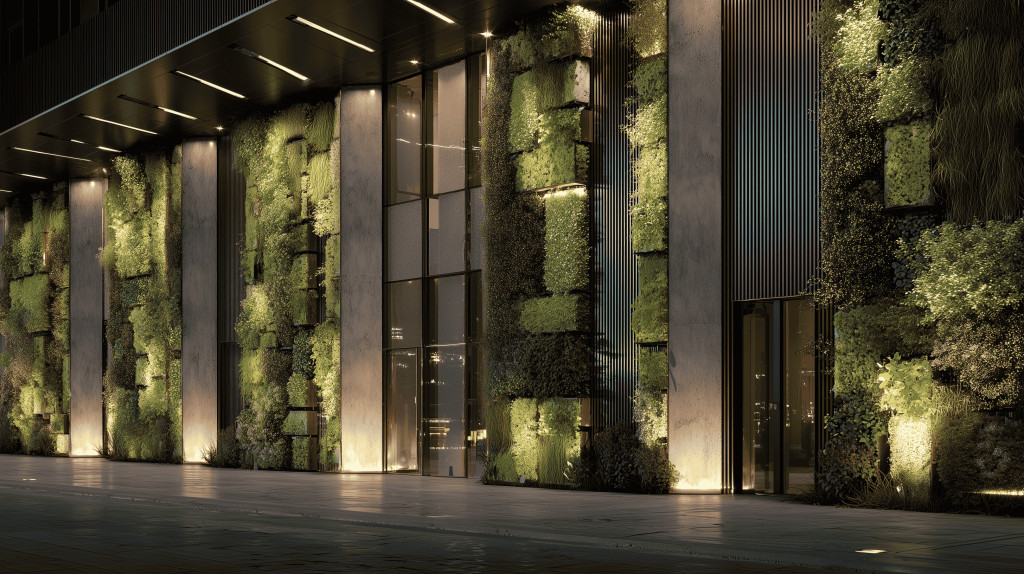
These systems turn inert surfaces into living ones, adding vegetation where a densely built city has no ground left to give. Beyond the visual result, they deliver environmental, social and energy benefits that matter when the goal is a more resilient urban fabric.
Environmental benefits of modular living walls
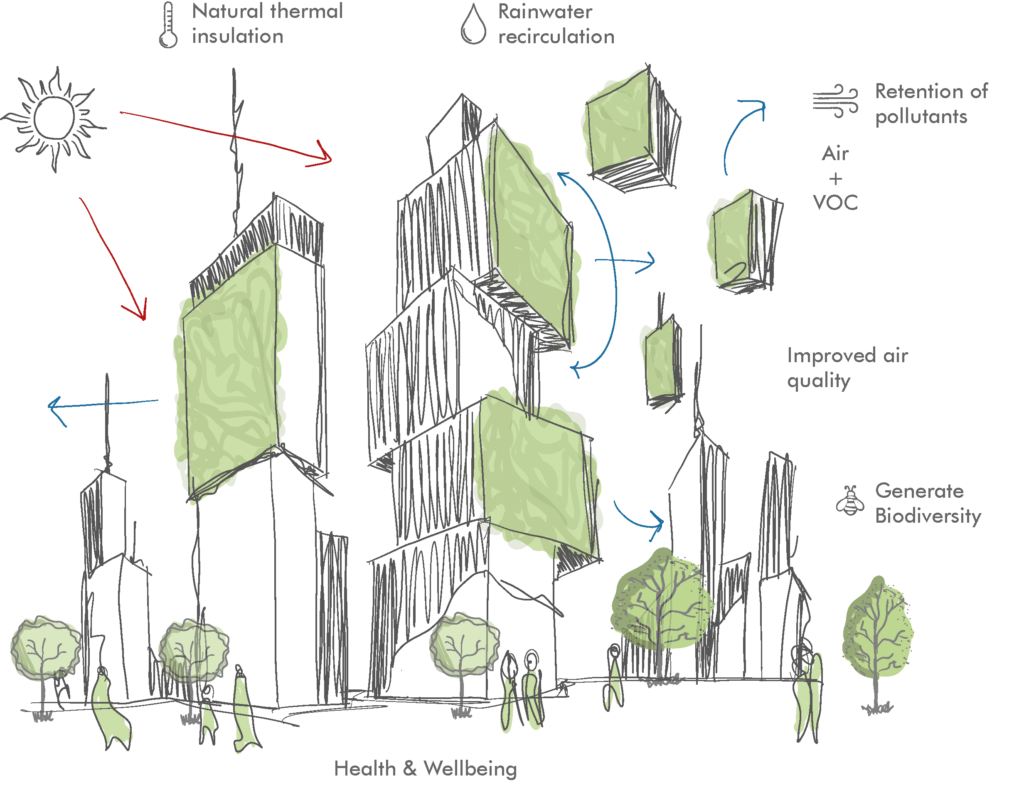
Modular living walls do considerably more than improve how a building looks. Their benefits run from air quality and energy performance through to protecting the building fabric itself, and they add up to healthier, more sustainable cities.
Better air quality
Living walls work as natural biofilters, taking up atmospheric pollutants such as CO₂, NOx and particulate matter (PM). In doing so they help bring pollution down and improve urban health.
Reducing the urban heat island effect
One of the clearest benefits is the way a living wall cuts the solar radiation a building absorbs and the heat it then radiates back out.
Studies report drops of as much as 8–9 °C in streets flanked by green façades, which is a real difference in cities with extreme summers.
Energy savings and building performance
The Fytotextile modular living wall acts as an additional layer of thermal insulation, reducing the call on air conditioning in summer and on heating in winter. That shows up as lower energy bills and a smaller environmental footprint.
Regulating the urban microclimate
Through evapotranspiration, living walls cool the surrounding air and raise relative humidity, which makes the street a more comfortable place for the people who live and move through it.
Protecting the façade
Living walls also extend the service life of the materials behind them, shielding the façade from solar radiation, wind and sharp swings in temperature.
None of this is theoretical: our completed projects show how buildings and cities are already working this way.
The Fytotextile modular living wall
The Fytotextile system has become an international reference thanks to a multi-layer textile panel that:
- makes irrigation efficient and easy to control;
- keeps the root zone oxygenated;
- supports healthy, long-lived planting.
Because it is modular, it suits a small interior wall and a large urban façade equally well, and it adapts to the geometry of the project rather than the other way round.
Modular living walls are not a passing aesthetic. They are green infrastructure, and a practical answer to the environmental problems cities are dealing with now. By improving air quality, taking the edge off the heat island effect, cutting energy use and protecting the façade, they do several jobs at once.
Thinking about a living wall for your next project? Talk to Terapia Urbana
and we will tell you what it would take.
Frequently asked questions about modular living walls
Does a modular living wall need a lot of maintenance?
No. Modular systems like Fytotextile are designed with efficient irrigation and drainage, which keeps the maintenance regime straightforward.
Can living walls be installed indoors?
Yes. Modular systems work on exterior façades and interior walls alike, provided the planting is specified for the light and ventilation available.
What does it give a building owner?
Beyond better energy performance and a longer-lasting façade, it adds value to the property and signals a building that takes sustainability seriously.
Do they genuinely reduce the urban heat island effect?
Yes. The evidence shows living walls can bring urban air temperature down by as much as 8–9 °C, a noticeable gain in thermal comfort.